

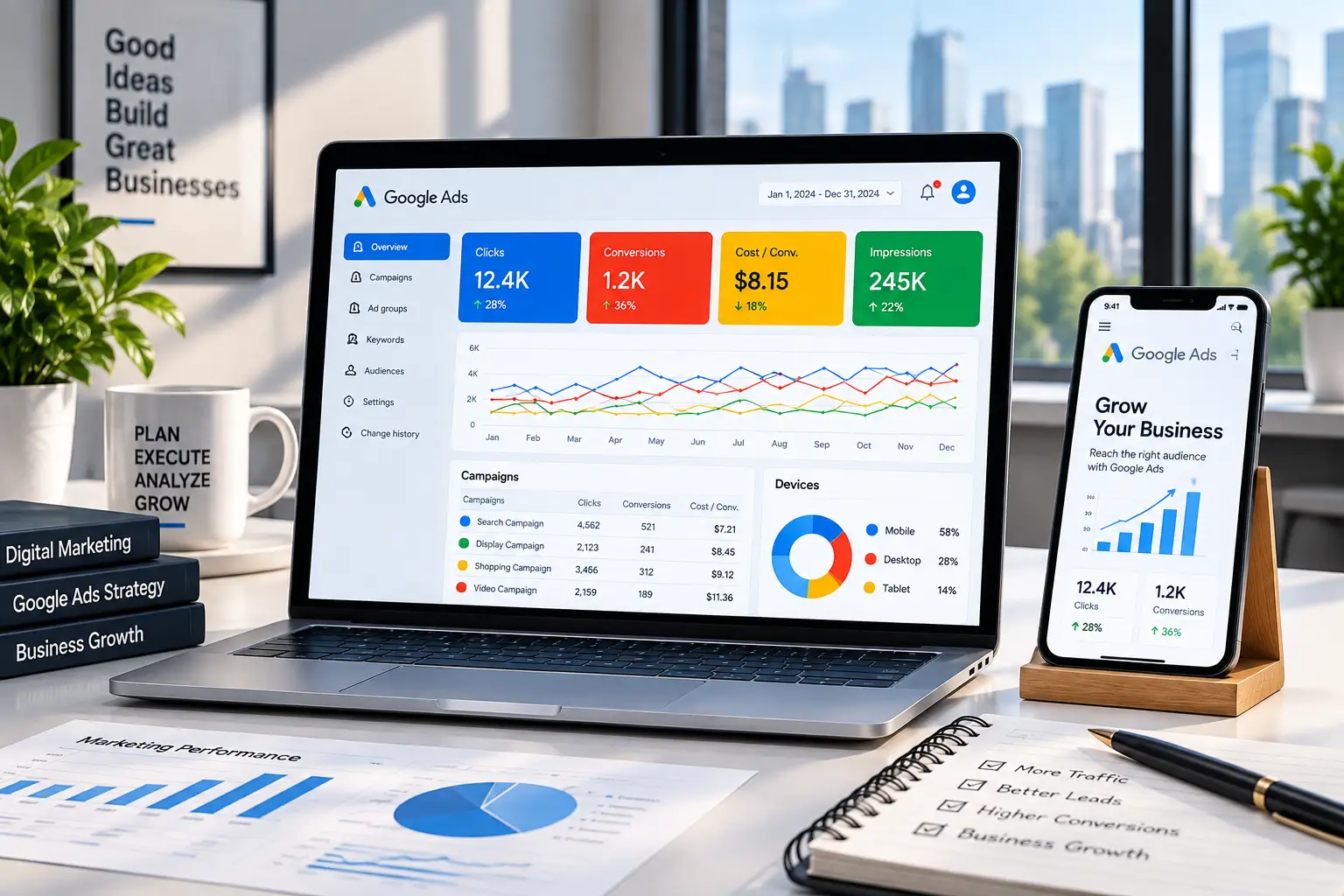
Understanding Google Ads: An Introduction
Google Ads is a powerful online advertising platform that enables businesses to reach potential customers effectively. It utilizes a pay-per-click (PPC) model, allowing advertisers to pay only when users click on their ads. This model provides a cost-effective way for companies to market their products and services while targeting specific demographics.
The platform encompasses various types of ads, including search, display, video, and shopping ads. Search ads are visible in the results when users perform queries related to the advertised products or services. These ads appear above or below the organic search results, facilitating high visibility and engagement from searchers with intent. Display ads, on the other hand, are illustrated banners that appear on websites within the Google Display Network, allowing advertisers to capture attention visually.
Video ads are a vital component of Google Ads, particularly on platforms like YouTube, where brands can engage audiences through compelling video content. Shopping ads showcase specific products alongside prices and images directly in search results, providing an efficient way for online retailers to connect with consumers who are ready to purchase.
To navigate Google Ads effectively, understanding key terminology is essential. Terms such as keywords, ad groups, and quality score play a significant role in the success of campaigns. Keywords are specific terms that trigger ads and help target audiences accurately. Ad groups organize these keywords into themed collections for more effective management. Quality score, determined by factors like click-through rate and relevance, affects ad placement and cost-per-click rates.
With its diverse ad formats and customizable targeting options, Google Ads empowers businesses to optimize their advertising strategies, ultimately driving traffic and increasing conversions. Understanding these fundamental aspects of Google Ads is crucial for leveraging its full potential for successful online campaigns.
Setting Up Your First Google Ads Campaign
Creating your first Google Ads campaign can seem daunting, but by following a structured approach, you can navigate the process with confidence. The first step in setting up your campaign is to define your campaign objectives. Determine whether you want to drive sales, increase website traffic, or boost brand awareness. This clarity will guide your decisions throughout the campaign creation process.
Once your objectives are clear, it’s time to define your target audience. Consider demographics such as age, gender, location, and interests. Google Ads offers tools to help you specify your audience, ensuring that your ads reach those most likely to convert. The more specific you are in targeting, the more effective your campaign is likely to be.
Next, you will need to set your budget. Google Ads operates on a bidding system, allowing you to determine how much you are willing to spend daily or monthly. It is advisable to start with a modest budget while you familiarize yourself with the platform and gather data on ad performance. As you gain insights, you can adjust your budget to enhance results.
After establishing your target audience and budget, you will choose keywords. Keywords are crucial as they determine when and where your ads will appear. Use Google’s Keyword Planner to find relevant keywords that align with your campaign objectives. Opt for a mix of broad and specific keywords to maximize your reach and relevance.
The final step in the setup process involves crafting compelling ad copy. Your ad should grab attention and convey a clear message about what you are offering. Incorporate your keywords naturally into the ad without compromising readability. Focus on highlighting the benefits of your product or service and include a strong call to action to encourage users to click on your ad.
By following these steps, you can effectively set up your first Google Ads campaign, paving the way for successful advertising and ultimately achieving your marketing goals.
Optimizing Google Ads for Better Performance
Effective optimization of Google Ads campaigns is essential for maximizing return on investment and driving quality traffic to your website. A vital first step in this process is conducting regular A/B testing on different ad versions. By creating variations of your ads, you can gather valuable insights into what resonates best with your target audience. This iterative approach allows you to refine your ad copy, headlines, and visuals to align more closely with user interests, ultimately enhancing click-through rates and conversions.
Another critical aspect of campaign optimization involves systematically adjusting bids based on performance metrics. Analyzing data such as cost per click, conversion rates, and overall return on ad spend can illuminate where to increase or decrease bids. This data-driven strategy helps ensure that your ad budget is allocated effectively, promoting the ads that perform well while reducing spending on underperformers.
Furthermore, understanding your audience and refining targeting parameters are crucial for improving ad performance. Utilize Google Ads’ audience targeting features to hone in on demographics, interests, and online behaviors that correlate with your ideal customer profile. By ensuring your ads reach the right individuals, you can significantly enhance the efficiency of your campaigns.
Utilizing negative keywords is another strategic approach that can boost performance. By specifying keywords that you do not want your ads to show up for, you can prevent irrelevant traffic and focus on users who are more likely to convert. This refinement not only improves click-through rates but also leads to a more efficient budget allocation.
In conclusion, by implementing these strategies, including A/B testing, bid adjustments, refining targeting, and using negative keywords, advertisers can enhance the effectiveness of their Google Ads campaigns significantly. Continuous optimization is fundamental to achieving long-term success in the competitive landscape of online advertising.
Common Mistakes to Avoid in Google Ads
When utilizing Google Ads, advertisers frequently encounter a range of pitfalls that can compromise campaign effectiveness. Understanding and avoiding these common mistakes is essential for maximizing return on investment.
One significant error is inadequate keyword research. Many advertisers do not invest the necessary time in identifying the most relevant keywords for their products or services. This can lead to wasted budget on irrelevant searches and diminished visibility. To counter this, conducting thorough research using tools like Google Keyword Planner can help pinpoint high-traffic, relevant keywords that align with user intent.
Additionally, poor ad copy often hinders campaign performance. Ads that fail to resonate with potential customers can result in low click-through rates. Crafting compelling ad copy that clearly communicates the value proposition and includes a strong call to action is crucial. A/B testing different variations can provide insight into what resonates best with the target audience.
Another common oversight is the neglect of mobile users. With an increasing number of searches conducted on mobile devices, failing to optimize ads for mobile can result in missed opportunities. Advertisers should ensure their ads and landing pages are mobile-friendly to enhance user experience and drive conversions.
Furthermore, underutilizing ad extensions can limit the effectiveness of Google Ads campaigns. Extensions such as site links, callouts, and structured snippets provide additional information and can improve ad visibility. By enhancing ads with available extensions, advertisers can increase engagement and drive higher click-through rates.
Lastly, failing to track conversions can prevent advertisers from assessing campaign performance. Without proper tracking, it is challenging to determine the effectiveness of keywords and ad content. Utilizing Google Ads conversion tracking allows for better optimization and informed decision-making based on data-driven insights.
By being mindful of these common mistakes in Google Ads, advertisers can enhance their campaigns and achieve better results in their advertising efforts.